
How to Search Fulton County Court Records
The main local search path starts with the Clerk of Superior and Magistrate Courts and the Fulton County Odyssey Portal. The Clerk's Find a Case page points users toward the local portal and re:SearchGA, but the page also reflects a core Fulton rule: the right search depends on the court. Superior and Magistrate Court files are handled through Clerk channels. State Court, Probate Court, Atlanta Municipal Court, other city courts, the Sheriff's Office, Georgia DDS, Georgia DPH, and federal PACER each maintain separate record paths.
Before searching, gather the case number if available, the full names of parties, an approximate filing or offense date, the court or agency name, and the record purpose. A certified divorce decree, a public docket sheet, a jail booking entry, and a DDS motor vehicle report are different products. A browser printout of a docket is not the same as a certified copy from the Clerk's office.
- Identify the court first: Superior for felony, divorce, equity, land-title, and major civil matters; State for many misdemeanors, traffic cases, and civil cases; Magistrate for small claims, dispossessories, warrant applications, first appearances, and preliminary matters; Probate for estates, guardianships, marriage licenses, and weapons carry services; municipal court for city ordinance or local traffic citations.
- Open the Fulton Odyssey Portal for Superior and Magistrate cases and search by case number when possible. If the number is missing, search party names and narrow by date, case category, court location, or status.
- Check re:SearchGA when the local portal does not show the expected case or a statewide search path is more practical. Document visibility varies by court, case type, portal role, and security rules.
- For criminal matters, separate the jail booking from the court case. The Sheriff roster may show current charges, bond, and custody status; the court docket shows filings, hearings, pleas, dispositions, sentences, and post-judgment events.
- Use Clerk records services, public courthouse terminals, eCertification, mail, or counter service for older records, certified copies, sealed-file questions, and documents that do not display online.
The Fulton Clerk's official access point for case lookup is shown on the Find a Case page.
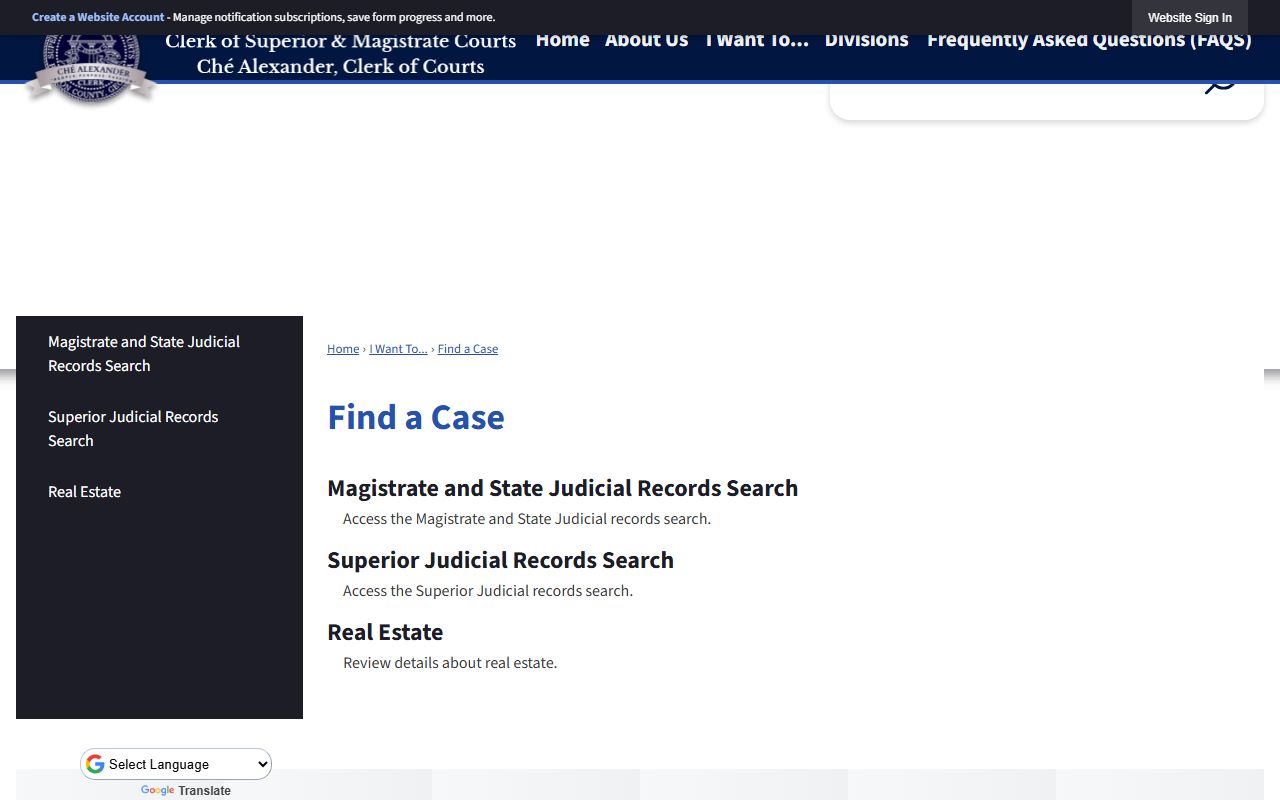
That source matters because it connects Fulton County search users to both local portal access and in-person public computer options.
Fulton Portal Search Fields
The Fulton Odyssey Portal and re:SearchGA screens use familiar search fields, but a broad name search in a county as large as Fulton can create false matches. Exact case numbers, business names, attorney names, filing dates, and court filters are useful because Fulton includes Superior, Magistrate, State, Probate, juvenile, municipal, jail, DDS, DPH, and federal record systems that do not all share one index.
| Field | How to Use It | Fulton County Note |
|---|---|---|
| Smart Search | Enter a case number, party name, business name, or attorney name. | Useful for a first pass, but narrow the result set when names are common. |
| Case Number | Use the exact court case ID from a notice, pleading, citation, or docket entry. | Best field when a Superior or Magistrate number is known. |
| Party Name | Search a person or entity name, then compare role, date, and case type. | Spelling variations and business suffixes can change results. |
| Location / Court | Limit the search to the relevant court location. | Local portal coverage differs from statewide re:SearchGA choices. |
| Case Category / Type | Choose civil, criminal, domestic, magistrate, or another available category. | Do not use a criminal category to find a jail-only booking or a Probate estate. |
| Date Filed From / To | Limit by filing date range. | Helpful for older files and common-party names. |
| Status | Filter open, closed, disposed, pending, inactive, or similar status labels. | A closed case may still have enforceable orders, sentence terms, or appeal activity. |
Fulton's public Odyssey interface is available through the Fulton County Odyssey Portal.
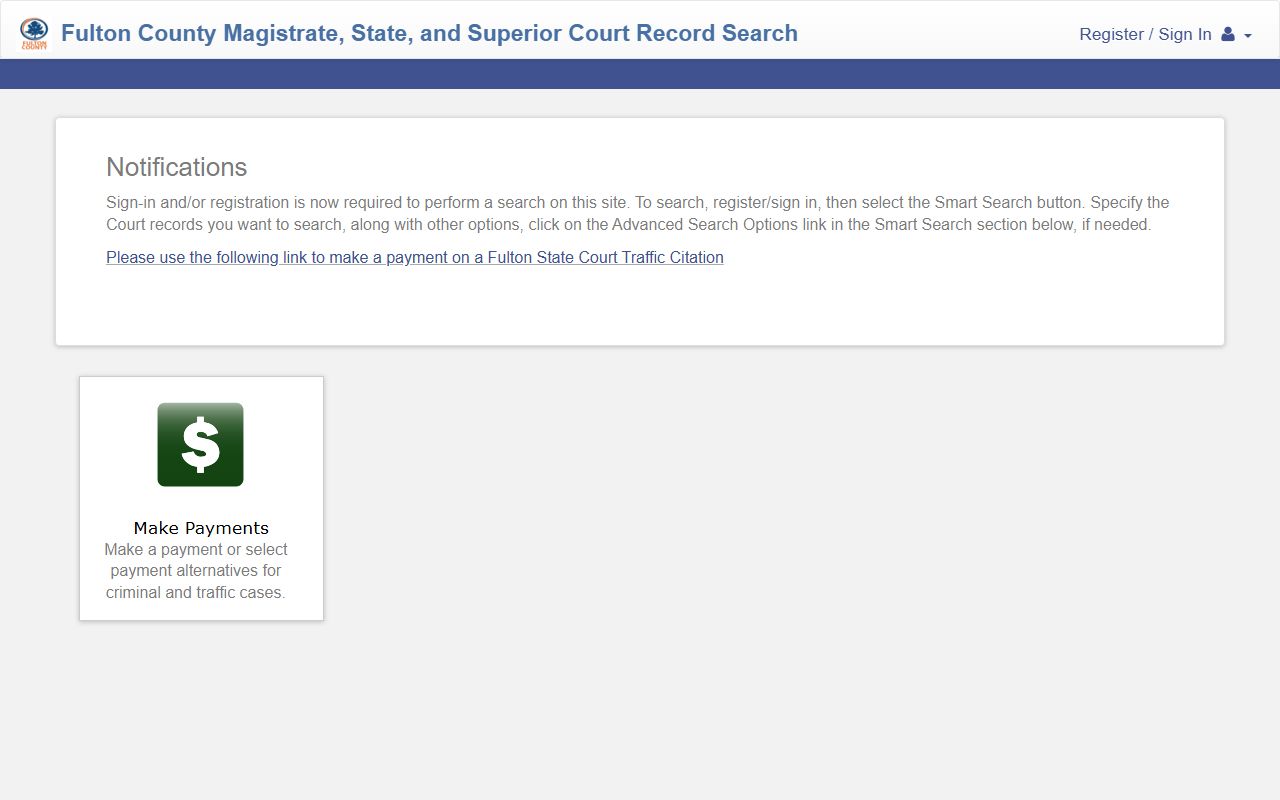
The portal is a starting point for Superior and Magistrate case lookup, while certified copies and restricted documents still require the proper clerk service.
The Fulton County Court System
Georgia's county trial courts are not a single-court model. In Fulton County, Superior Court is the general-jurisdiction trial court and is part of the Atlanta Judicial Circuit. It handles felony criminal cases, divorce, major civil matters, equity, title-to-land cases, and appeals from lower tribunals. State Court handles many misdemeanor, traffic, and civil matters. Magistrate Court handles small claims, dispossessories, garnishments, warrant applications, preliminary hearings, and first appearances. Probate Court handles estates, guardianships, conservatorships, marriage licenses, weapons carry licenses, and related services.
Above the local courts sit the Court of Appeals of Georgia and the Supreme Court of Georgia. Below or alongside county court systems are municipal courts for Atlanta and other Fulton County cities, including Sandy Springs, Roswell, Johns Creek, Alpharetta, Milton, South Fulton, East Point, College Park, Hapeville, Union City, Fairburn, Palmetto, Mountain Park, and Chattahoochee Hills where those cities operate courts.
Typical case path: Municipal, Magistrate, State, Probate, or Superior Court at the trial level; Court of Appeals of Georgia for most appeals; Supreme Court of Georgia for categories reserved by constitution or statute.
| Court or Office | Main Location | Core Jurisdiction |
|---|---|---|
| Fulton County Superior Court | 136 Pryor Street SW, Atlanta, GA 30303 | Felonies, divorce, equity, major civil cases, title to land, appeals. |
| Fulton County State Court | 185 Central Avenue SW, Atlanta, GA 30303 | Misdemeanors, traffic, and civil cases within state-court jurisdiction. |
| Fulton County Magistrate Court | 185 Central Avenue SW, Atlanta, GA 30303 | Small claims, dispossessories, garnishments, warrants, preliminary hearings. |
| Fulton County Probate Court | 136 Pryor Street SW, Suite C-230, Atlanta, GA 30303 | Estates, guardianships, conservatorships, marriage, weapons carry. |
| Atlanta Municipal Court | 150 Garnett Street SW, Atlanta, GA 30303 | Atlanta ordinance and traffic citations. |
The Fulton County Superior Court official site is the local source for divisions, judges, calendars, accountability courts, and trial-court notices.
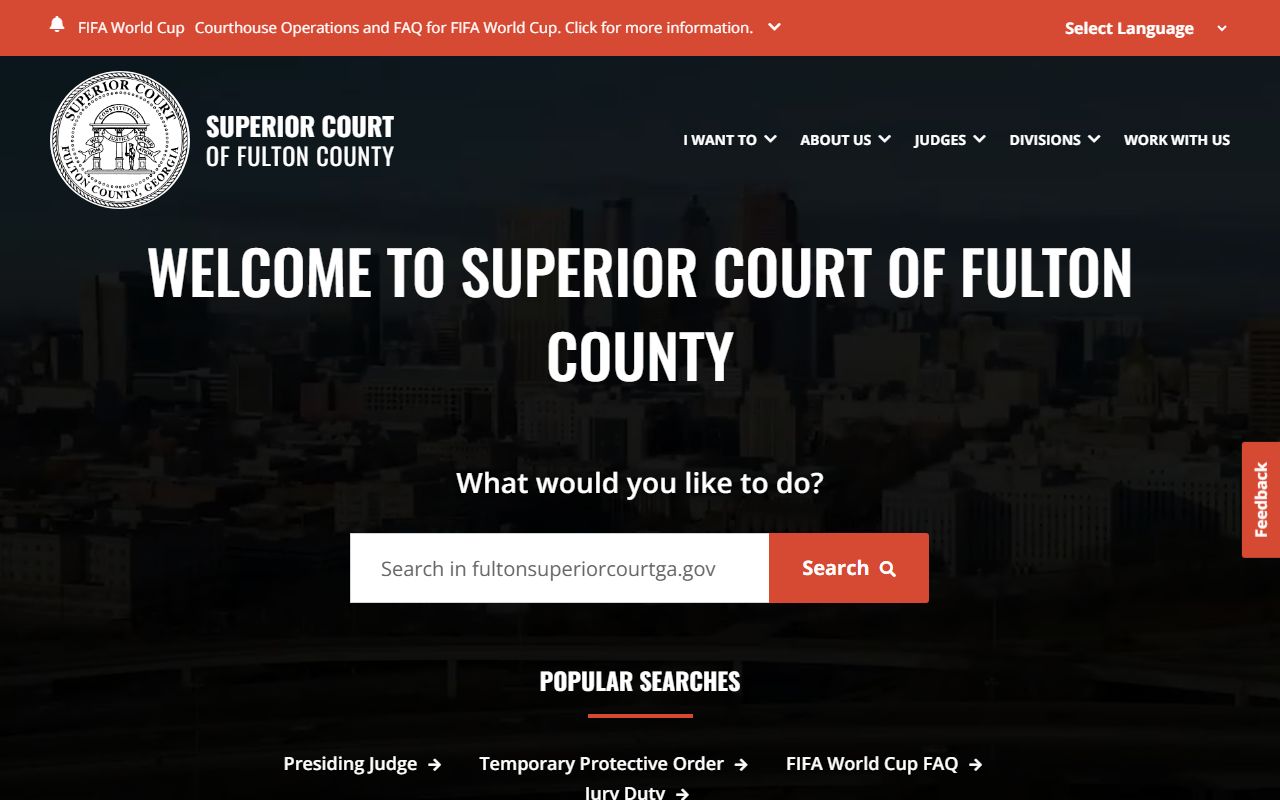
Superior Court information is especially important for felony, divorce, equity, business, and major civil records that do not belong in a city or lower-court citation system.
Fulton County Courthouses and Offices
The Lewis R. Slaton Courthouse at 136 Pryor Street SW is the primary downtown courthouse for Fulton County Superior Court and many Clerk of Superior and Magistrate Courts services. The court ecosystem extends beyond that building. State Court and Magistrate Court use Central Avenue court facilities, Probate Court operates its own services from Suite C-230 at Pryor Street, Atlanta Municipal Court handles city citations at Garnett Street, and the Sheriff's Office operates the Rice Street jail.
Clerk of Superior and Magistrate Courts
136 Pryor Street SW
Atlanta, GA 30303
404-613-5313
State Court and Magistrate Court
185 Central Avenue SW
Atlanta, GA 30303
Use court-specific office pages
Fulton County Probate Court
136 Pryor Street SW, Suite C-230
Atlanta, GA 30303
Use Probate Court service pages
Types of Fulton County Court Records
Fulton civil records can include complaints, answers, counterclaims, motions, service returns, orders, judgments, garnishments, liens, and appeals. Criminal court records can show indictment or accusation events, arraignment, motions, plea, verdict, sentence, probation, appeal, and post-conviction entries. Family records include divorce, custody, support, legitimation, contempt, and domestic-relations files, with sensitive financial and minor information often restricted or redacted.
Probate records include wills, petitions for letters testamentary or administration, inventories, annual returns, guardianship and conservatorship filings, citations, notices, orders, and final settlements. Traffic records may belong to State Court or a municipal court, and a court traffic record is not the same as a DDS motor vehicle report. Juvenile, adoption, mental health, sealed, victim-safety, and certain protective-order materials carry stronger access limits.
- Civil records - Superior, State, and Magistrate civil files depending on amount, subject matter, and filing type.
- Criminal records - Superior felony matters, State Court misdemeanors, and Magistrate first-appearance or warrant-related activity.
- Family and divorce records - Superior Court domestic cases, with redaction or sealing for protected details.
- Probate records - Estate, guardianship, conservatorship, marriage, and related Probate Court services.
- Traffic records - State Court, municipal court, or DDS record channels depending on the citation and purpose.
re:SearchGA is the statewide court-record search channel connected to participating Georgia courts.
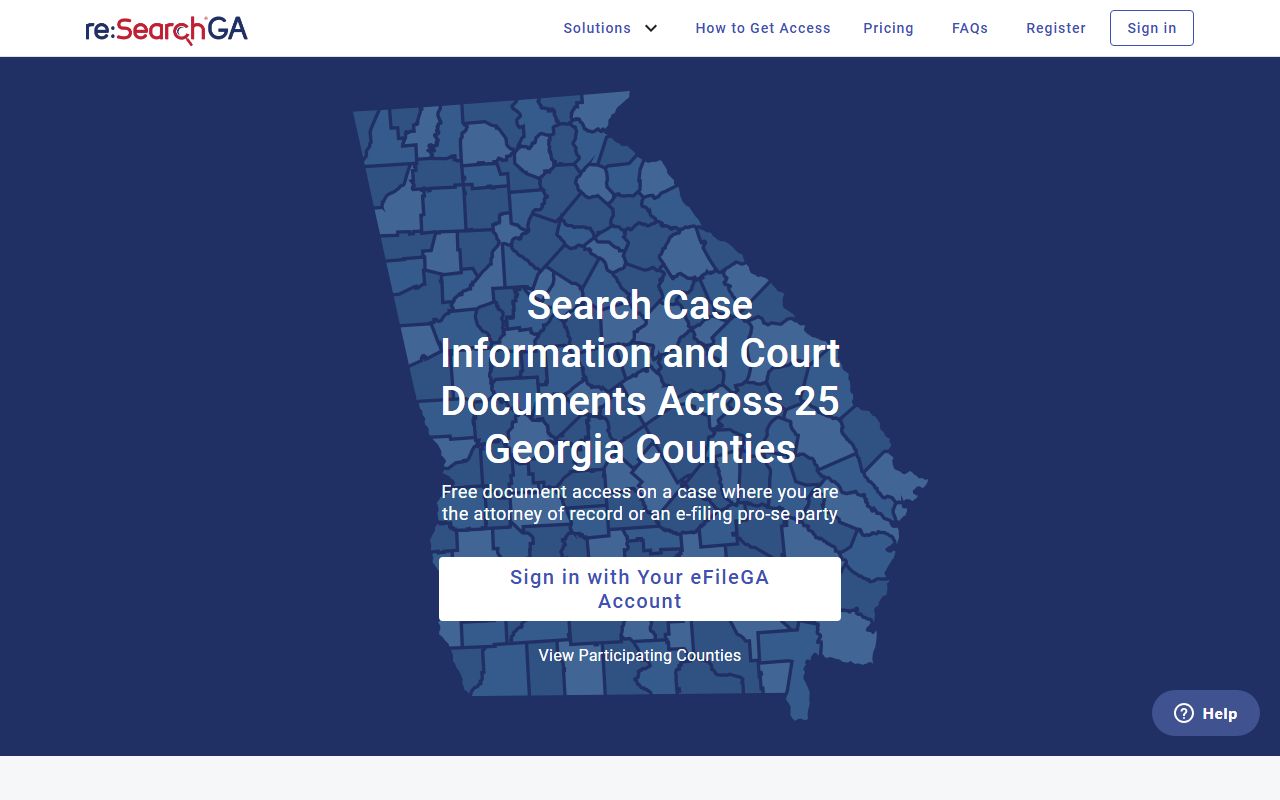
It is useful when a search crosses county lines or when a statewide interface is more practical than a single local portal.
What Fulton County Court Records Show
A public case screen commonly shows a case number, court location, case style, filing date, status, parties, attorneys, docket events, hearing settings, documents when available, and financial entries in some case types. Criminal fields may include charge description, statute, offense date, arrest date, warrant number, indictment or accusation count, plea, disposition, sentence, probation, and bond. Civil fields may include cause of action, service, answer, motions, order, judgment amount, garnishment, lien details, and appeal entries.
| Field | What It Shows |
|---|---|
| Case Number | The court-specific identifier used to request copies, track hearings, or distinguish similar names. |
| Filing Date | The date the case or filing entered the court system. |
| Parties | Names and roles such as plaintiff, defendant, petitioner, respondent, state, attorney, or business entity. |
| Charges or Cause | The criminal allegation, civil cause, family petition, probate filing type, or citation subject. |
| Docket Entries | A chronological list of filings, hearings, orders, continuances, dispositions, judgments, and notices of appeal. |
| Disposition | The outcome of a charge, claim, citation, petition, or case. |
| Document Images | May be public, blocked, fee-gated, limited by role, or available only by Clerk request or certification. |
Public Access Laws for Fulton County Records
Georgia court records are generally public unless sealed, restricted by statute, or redacted under court rules. The practical path depends on the record. Superior and Magistrate case records start with the Clerk and Odyssey or re:SearchGA. Probate records start with Probate Court. Sheriff booking and jail records start with the Sheriff's Office. County administrative records use the Fulton County open-records portal. A public-records request can help with agency records, but it is not a substitute for a Clerk certified-copy request when an official court document is needed.
Key Statutes and Rules:
O.C.G.A. § 50-18-70 - Georgia's Open Records Act opens public agency records unless a specific exemption applies.
O.C.G.A. § 50-18-71 - agencies must respond within the statutory time frame and may charge lawful search, retrieval, redaction, and copy fees.
O.C.G.A. § 35-3-37 - eligible Georgia criminal history entries may be restricted from public dissemination through the record-restriction process.
Uniform Superior Court Rule 21 - court-file access may be limited only through required procedures and findings.
Records That Are Restricted or Confidential
Juvenile delinquency, dependency, and children-in-need-of-services cases are not ordinary public name-search records. Adoption records are confidential. Mental health proceedings, competency materials, medical information, guardianship details, financial account numbers, Social Security numbers, full dates of birth, victim-safe addresses, and names of minors may be sealed, restricted, or redacted. A sealed case may appear with limited text, may hide document images, or may not display in a public portal at all.
Georgia often uses the term record restriction rather than expungement. A person usually starts by identifying the arrest, charge, court, disposition, and agency record. Eligibility depends on the outcome and statutory category. Dismissed, not-prosecuted, acquitted, completed diversion, or pardoned matters may qualify in some circumstances, while many convictions do not. A final disposition from the Clerk is often needed before an agency, prosecutor, or court can evaluate restriction. After restriction, law enforcement, prosecutors, courts, licensing boards, and other authorized users may still have lawful access.
Specialty Courts and Case Programs
Fulton County Superior Court publishes accountability court programming that can affect criminal case workflow and docket entries. Drug Court and substance-use tracks generally combine judicial supervision, treatment, drug testing, case management, status hearings, and graduated sanctions or incentives. Mental Health Court and behavioral health tracks use a team model with the judge, prosecution, defense, supervision, treatment providers, and case managers. Veterans Treatment Court connects eligible veterans with treatment, supervision, VA or community services, peer support, and judicial review.
These programs are not separate record custodians. Their events may appear in a criminal case docket as review hearings, compliance updates, sanctions, graduation, termination, or sentence modification, but treatment details and medical records are sensitive. Eligibility is case-specific and may depend on offense type, criminal history, treatment needs, prosecutor approval, veteran status, and program capacity.
The Fulton County State Court official site is the local source for State Court case information, court calendars, and public service updates.
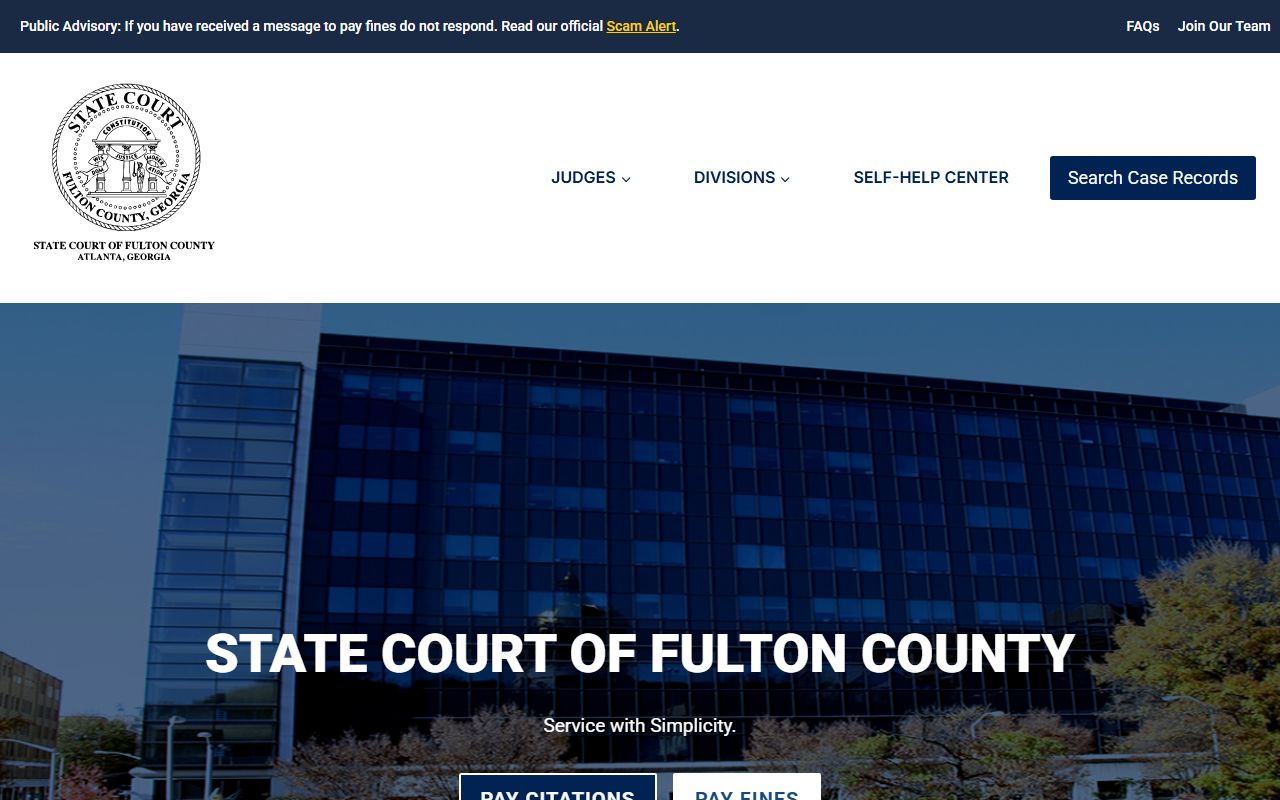
State Court remains a separate court from Superior Court, which matters when a misdemeanor or traffic case is not in a felony Superior Court docket.
Fulton County Sheriff and Jail Records
The Fulton County Sheriff's Office operates the county jail and public inmate-search channel. The main jail is Fulton County Jail, 901 Rice Street NW, Atlanta, GA 30318. Sheriff Patrick "Pat" Labat is identified in official office materials as the current sheriff. Jail records are custody records, not the same as court records. The roster may show a booking number, booking date, name, mugshot where public, charges, arresting agency, bond, holds, court date, housing location where public, and release status. The court case record later shows filings, hearings, pleas, dispositions, and sentence events.
Access channels include the public Sheriff inmate portal, Sheriff's Office jail information channels, Sheriff's open-records requests for agency or booking materials not exposed online, the Georgia Department of Corrections offender query for sentenced state-prison custody, the GBI sex-offender registry for registered sex-offender status, and the federal Bureau of Prisons locator for federal custody. Research did not confirm an official Fulton Sheriff app with an app-only inmate or warrant search, so no app-only feature should be assumed.
The Fulton County Sheriff's Office official home page is a separate source from the Clerk's court-record portals.

That distinction helps prevent confusion between a current custody snapshot and the legal case file maintained by the court.
Warrants, Charges, and Bench Warrants
Fulton County warrant information can sit with several offices. Magistrate Court handles warrant applications, first appearances, and preliminary criminal proceedings. Superior Court may show felony bench warrants, capias entries, and warrant-related docket events after a felony case exists. State Court and municipal courts can issue bench warrants for missed misdemeanor, traffic, or ordinance dates. The Sheriff's Office executes warrants and maintains booking records, but the issuing court controls many case details.
A warrant record may show the wanted or arrested person's name, warrant number, case number, issuing court, judge or magistrate, charge, statute, warrant type, issue date, service date, bond amount, no-bond status, arresting agency, next court date, or recall date. Georgia does not provide one public statewide active-warrant search for all local warrants. Verification should come from the issuing court or law-enforcement agency, especially before surrender, bond posting, or any attempt to resolve a failure-to-appear warrant.
Marriage, Divorce, and Probate Court
Marriage licenses in Fulton County are handled by Fulton County Probate Court, not the Clerk of Superior and Magistrate Courts. Probate Court service channels cover marriage application steps, appointments where required, certified copies of Fulton marriage records, estates, guardianships, conservatorships, weapons carry licenses, and certain vital-record services. The Georgia Department of Public Health provides state marriage record requests and divorce verifications, but DPH does not issue a full certified divorce decree from a Superior Court case file.
Divorce is a Superior Court family matter. A divorce search usually starts with the Fulton court portal or Clerk records services, and certified divorce decrees come from the Clerk. Probate estate files may include wills, petitions for letters, inventories, annual returns, citations, notices, orders, and settlements. Guardianship and conservatorship files can contain medical, capacity, financial, and minor information, so public access may be limited.
Fulton County Probate Court publishes its own service information for estates, marriage, guardianship, conservatorship, and related record needs.
Using Probate Court directly avoids routing estate or marriage-license questions through the wrong court-record clerk.
- Executor
- The person named to administer an estate under a will after the Probate Court grants authority.
- Administrator
- The person appointed to administer an estate when there is no qualifying executor.
- Guardian
- A person appointed to make personal decisions for a minor or incapacitated adult under court authority.
- Conservator
- A person appointed to manage property or financial affairs for someone protected by the court.
Traffic Tickets and Driver Records
Traffic records in Fulton County are split by court and purpose. A traffic court record belongs to the court handling the citation. A DDS motor vehicle report belongs to the Georgia Department of Driver Services. The court record shows the ticket, charge, court date, plea, fine, disposition, and warrant or failure-to-appear status. The DDS record shows license status, points, suspensions, and convictions reported to the state.
Fulton County State Court handles many county-level traffic and misdemeanor matters. Atlanta Municipal Court handles Atlanta city traffic and ordinance cases through its own court and online portal. Other municipal courts control tickets written by their city police departments. DUI felonies, serious vehicular crimes, and felony cases are Superior Court criminal matters rather than simple traffic-ticket records. CDL drivers should be especially careful because points, reporting, and diversion consequences can differ from ordinary driver cases.
Certified Copies and Records Fees
The Clerk of Superior and Magistrate Courts provides records services, copy services, and eCertification for eligible court and real-estate documents. eCertification is not the same as printing a docket screen. It is an electronically certified copy service for documents that qualify. Users requesting copies should provide case number, party names, filing date range, case type, document title, copy type, delivery method, and contact information so staff can locate the record and quote any lawful cost.
| Service | Where to Start | Fee Note |
|---|---|---|
| Plain court copy | Clerk records services or public terminal follow-up | Consult the current Clerk fee page before payment. |
| Certified court copy | Clerk certified-copy request or counter service | Certification and per-page charges may apply. |
| eCertified copy | Clerk eCertification service | Electronic certification, service, and convenience fees may apply. |
| Probate certified copy | Fulton Probate Court | Probate Court publishes separate estate, marriage, and certified-copy fees. |
| DDS motor vehicle report | Georgia DDS MVR request | DDS charges a state fee separate from court-copy fees. |
The Fulton Clerk home page is the hub for eCertification, eFiling, records services, fees, calendars, passports, notary services, and case search.
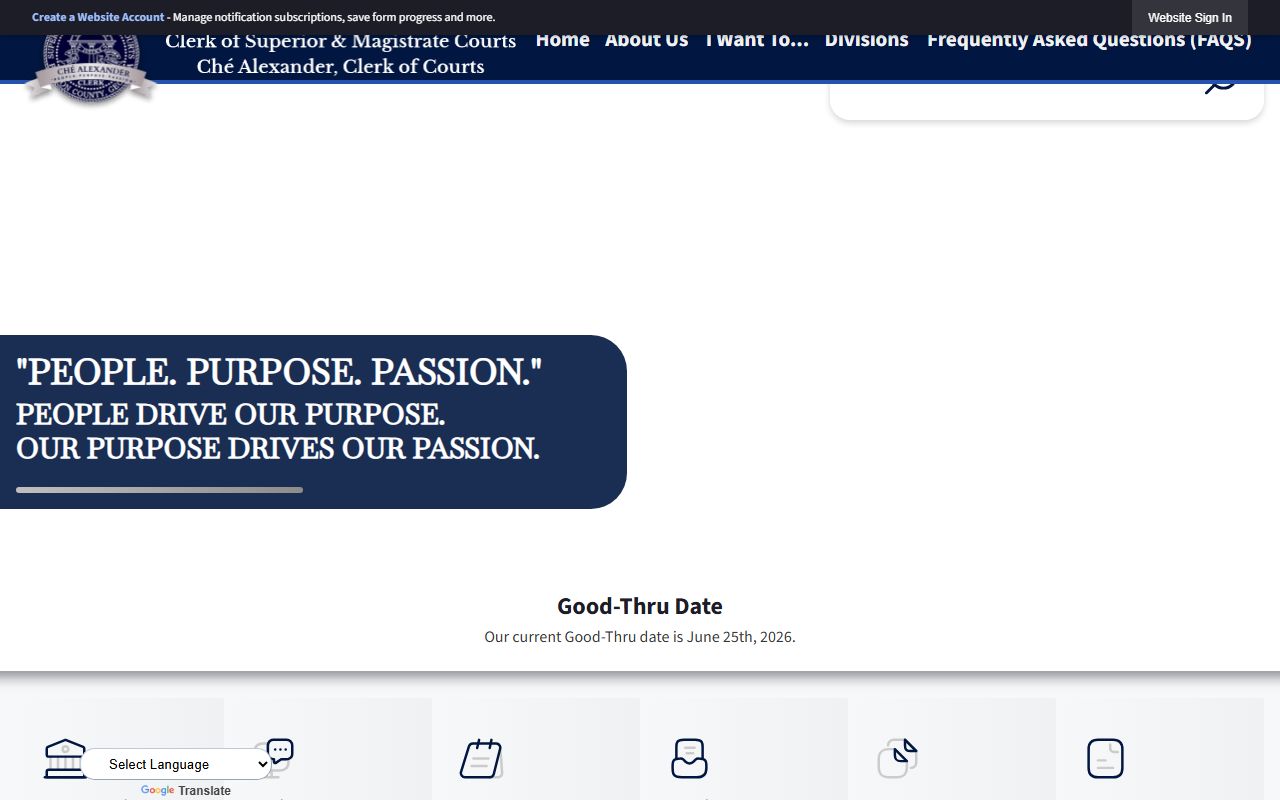
The Clerk's role is central for Superior and Magistrate records, while Probate Court and State Court still keep their own service channels.
State Court and Magistrate Court Records
Fulton State Court and Fulton Magistrate Court are separate from Superior Court. State Court is important for many misdemeanor, traffic, and civil matters within its jurisdiction. Magistrate Court is important for small claims, dispossessories, garnishments, civil warrant proceedings, warrant applications, first appearances, and preliminary criminal proceedings. A felony arrest may start with a Magistrate first appearance before the case later appears in Superior Court.
For eviction or small-claim records, Magistrate Court is usually the better starting point than Superior Court. For many traffic or misdemeanor records, State Court or a municipal court may be the correct system. For an Atlanta city citation, the Atlanta Municipal Court page and portal should be checked before assuming the record belongs to Fulton State Court.
Fulton Magistrate Court publishes its own public information for small claims, dispossessory cases, warrants, and first appearances.
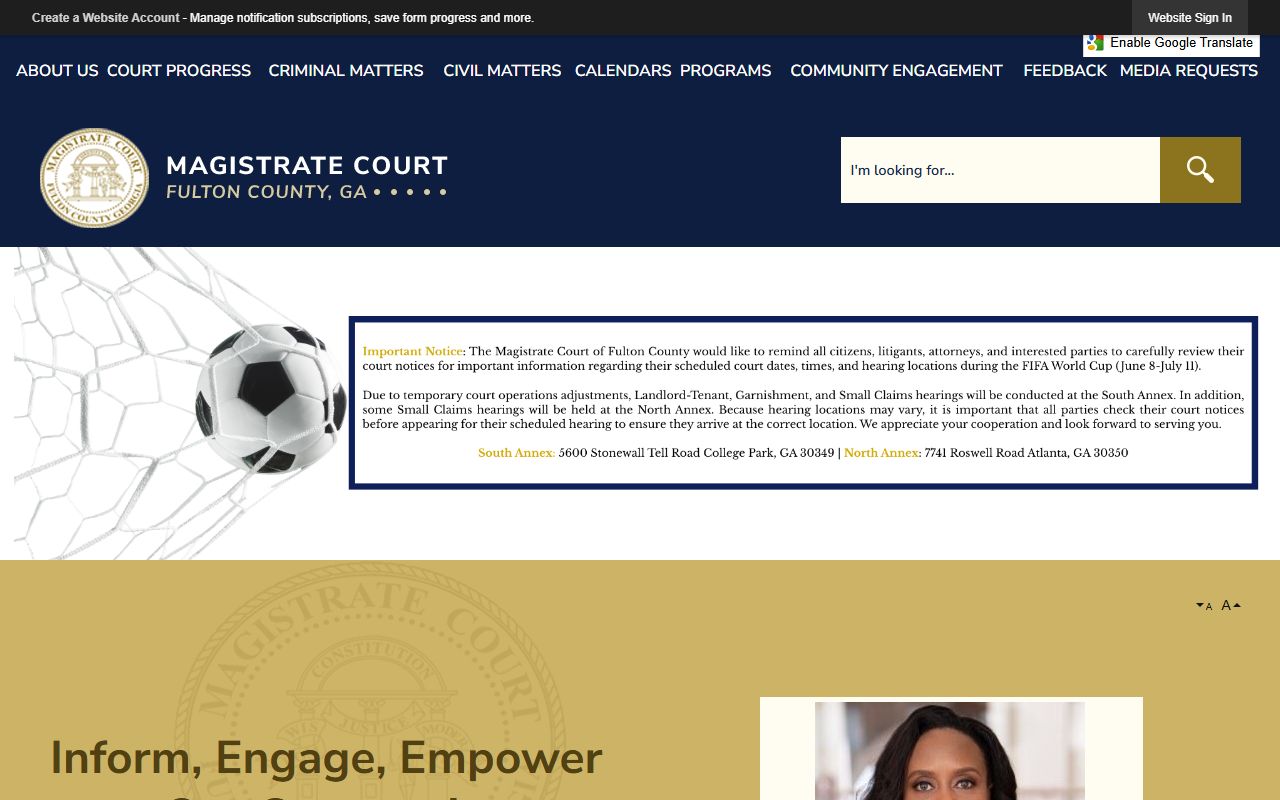
Magistrate Court records often explain the early stage of a case before a felony, civil claim, or eviction reaches a later outcome.
Common Fulton Court Record Terms
- Docket
- The chronological event list in a case, including filings, hearings, orders, and dispositions.
- Disposition
- The outcome of a charge, claim, citation, petition, or case.
- Indictment
- A felony charging document returned by a grand jury.
- Accusation
- A prosecutor-filed charging document used in some criminal cases.
- Bond
- Security or conditions allowing release before trial.
- Capias
- A Georgia term often used for a court order or writ requiring arrest or appearance.
- Garnishment
- A collection proceeding against wages, bank accounts, or property.
- Record Restriction
- Georgia's process for limiting public dissemination of eligible criminal-history entries.
Accuracy and Record Limitations
Online court records can lag behind courtroom activity, clerk processing, document review, payment posting, warrant recall, jail release, or transfer to another agency. Some records show only docket text and not document images. Others show public case data but require a Clerk request for a certified copy. Sealed, juvenile, adoption, protected family, guardianship, mental health, and personal-identifier information may be absent or redacted.
Note: Confirm official dates, dispositions, custody status, and certified-copy needs with the court or agency that created the record.
History of Fulton County Courts
Fulton County was created in 1853, with Atlanta as the county seat and legal center. The courts grew with Atlanta's role as the state capital, railroad hub, civil-rights center, and metropolitan economic center. The downtown legal district now places Fulton Superior Court, State Court, Magistrate Court, Probate Court, Atlanta Municipal Court, the Fulton County Government Center, Atlanta City Hall, the federal district courthouse, bankruptcy access, and MARTA's Five Points station within a compact area.
Court technology has shifted from paper indexes and clerk counters to eFiling, Odyssey public search, re:SearchGA, electronic certification, online calendars, and online citation/payment systems. In-person access still matters for older files, public terminals, sealed or restricted questions, and users who need staff to explain copy options.
Current Court and Jail Initiatives
Fulton County's record-access environment continues to change through electronic certification, eFiling, Odyssey public search, re:SearchGA, accountability courts, and online open-records request channels. The Clerk's eCertification service is one of the most practical changes for remote users because it can reduce the need to travel downtown for eligible certified records. Accountability courts remain active Superior Court initiatives that may affect criminal calendars, review hearings, compliance entries, and final dispositions.
The Rice Street jail remains a major public issue in Fulton County, with official materials and federal scrutiny focused on conditions, population management, safety, and facility planning. That context matters for court-record users because custody status, bond hearings, first appearances, transfer timing, and warrant holds can affect how quickly a criminal case moves from arrest to docketed court events. Official Sheriff, county, court, and Department of Justice sources should be checked for the newest dated notices before relying on jail operations information.
Frequently Asked Questions
Where should a Fulton County court search start?
Start with the court type. Superior and Magistrate records usually begin with the Clerk and Odyssey or re:SearchGA. State Court and municipal traffic records may require separate court channels. Probate estates and marriage records start with Probate Court. Jail bookings start with the Sheriff's Office. Federal cases start with PACER or the Northern District of Georgia, not the county portal.
Is a Fulton jail booking the same as a criminal court record?
No. A booking is a custody record created by the Sheriff's Office. It may show charges, bond, holds, and current jail status. The criminal court record is the legal case file and can show formal charges, docket events, motions, plea, disposition, sentence, probation, and appeals.
How do certified copies work?
Certified copies come from the record custodian, usually the Clerk of Superior and Magistrate Courts for Superior or Magistrate files and Probate Court for probate or marriage records. eCertification may be available for eligible Clerk documents. A printed portal page should not be treated as a certified court document.